Setting the Holiday Table in Complex Times: Nourishing Family Narratives

by April Dinwoodie
TRJ Executive Director

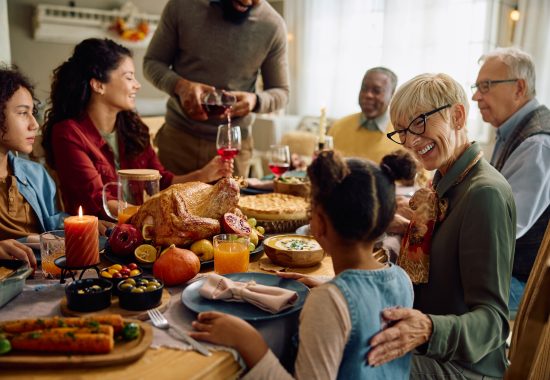
When I was growing up, my mom would always say a beautiful and simple Thanksgiving prayer. Every year, we’d close our eyes, hold hands, and listen to her voice rise and fall. The smell of turkey filled the air, and for a few moments everything felt still. I remember feeling thankful—surrounded by love, warmth, and the familiarity of family.

But I also remember the ache—the quiet wondering. My family of origin was never mentioned among the members of the extended family who were missing and prayed for. I thought of them every year. Were they celebrating too? Did they wonder about me the way I wondered about them?

Now, looking back, I realize that we were closing our eyes in more ways than one. We were closing our eyes to the family that wasn’t there, and to the history of the day itself—the story of this country, the Indigenous lives and legacies that were disrupted, the realities of what was taken and what was lost.

That unspoken tension—the both/and of Thanksgiving—has always lived inside me. The deep thankfulness for what I have, held right alongside the awareness of what’s missing and what must be named.

November and the Table of Truth

As we move into November, which is also National Adoption Awareness Month, the family table takes on even deeper meaning. It becomes a mirror—a place where stories of legacy, history, and belonging meet. For adoptive and especially transracial adoptive families, the holiday table can hold layers of love, difference, and longing all at once.

At Together on the Journey, we know that the table is more than a piece of furniture. It’s a symbol of connection and story. Who gathers around it—and who is missing—tells us a lot about how we understand family.
In my childhood home, we didn’t have words for that complexity, but I felt it deeply. The silence around my family of origin matched the silence around the history of Thanksgiving. Both were wrapped in good intentions, but both left important truths unspoken and left me to navigate the difficulties silently.

This year, instead of closing our eyes, let’s open them together. We can be thankful for the people around us and honest about the people and histories that are missing. We can hold thankfulness and truth at the same table.

Try this:
When it’s time to share what you’re thankful for, add a second invitation:

  • “What has been hard this year?”

This simple act can open space for honesty, empathy, and connection—reminding everyone that joy and difficulty can live side by side.

Expanding the Story of the Day

For some, Thanksgiving is a treasured family ritual. For others, it’s a reminder of pain and loss. Both truths can coexist. We can be thankful for the love we share while also being mindful of the full story of this day.

Consider how your family names and frames the holiday. Maybe you call it A Day of Thanks and Truth, Harvest Gathering, or simply Family Day. Learn about the Indigenous peoples whose land you live on. Talk about what was taken, not just what was shared. These small shifts don’t erase tradition—they expand it. They help children entrusted to you see that thankfulness and awareness can live together.

Telling the Truth Beautifully

For adopted people, the holidays often carry that same blend of joy and longing. Parents may want to make the day perfect, but what children often need most is honesty, not performance. Sometimes the most loving thing we can do is say out loud what everyone already feels.

Maybe that means lighting a candle for a family of origin. Maybe it’s saying, “We’re thankful for those who can’t be here,” and letting that sentence mean many things. It might even mean sitting in quiet reflection, acknowledging both the family gathered and the family unseen.

Making Space for the Whole Story

Every family has its own rhythm, its own version of the both/and. For some, it’s thankfulness and missing pieces. For others, it’s pride and pain, belonging and uncertainty. The goal isn’t to fix or smooth those feelings—it’s to let them breathe.
When we make room for all of it, we teach our children that they don’t have to choose between being thankful and being honest. They can be both.

Try this:
If something hard comes up during the holiday, take a breath before responding. You don’t need the perfect words.

  • A simple “I hear you” or “That makes sense” can be enough to open connection and build trust.

A Table of Thankfulness and Truth

When I think back to those moments of my childhood—the prayer, the warmth, the silence—I wish we had found words to hold the fullness of our experience. But now I know that each of us can begin again. We can tell new stories. We can open our eyes. We can hold hands across difference and history and say:

  • “We are thankful for what we have, and we honor what has been lost.”

That’s the table I want us all to set together now—a table where love and truth sit side by side, and where everyone, past and present, has a place.

Reflection Prompts for Families

  • What truths about Thanksgiving and adoption have been left unspoken in our home?
  • Who is at our table—and who is missing?
  • How can we honor both thankfulness and truth in the way we gather?
  • What new names, rituals, or stories might reflect our family’s values more fully?

This post is from our November 2025 newsletter. If you would like to get our newsletter in your inbox each month, as well as information about our annual TRJ Family Camp and our monthly Zoom call providing support for our transracial adoption parents, please subscribe.
November Nourishment: Sustaining Strong and Healthy Families

Thanksgiving can be one of the more complicated historical holidays, and for many in the United States, one of the more family and food-centric holidays. Whether you are a family that chooses not to mark Thanksgiving in a traditional way, or your family goes all out with a big Thanksgiving celebration, this month we are thinking about the family table and what might be true when there are differences of race and culture with transracial adoption. November also brings National Adoption Awareness Month, (NAAM) which can be challenging for some adopted persons. This month prompts on your activity deck include questions for both areas of discussion.

November Tip to Foster Conversations About Transracial Adoption

At Transracial Journeys we send out cues for conversations each month. Our Transracial Journeys card deck contains 3 cards for each month that the children use to ask their parents questions. Below are the questions for November. Before getting started, read the parent pro-tip each month.

November Tip for Parents: Talking about family and complicated history can activate deep-seated emotions and feelings. Make sure you have the support you need to process your feelings before and after the conversations you may have with your children.

Reference this month's feature article, Setting the Holiday Table in Complex Times: Nourishing Family Narratives, for more insight from a transracial adoptee's perspective. 

November Transracial Journeys Cards

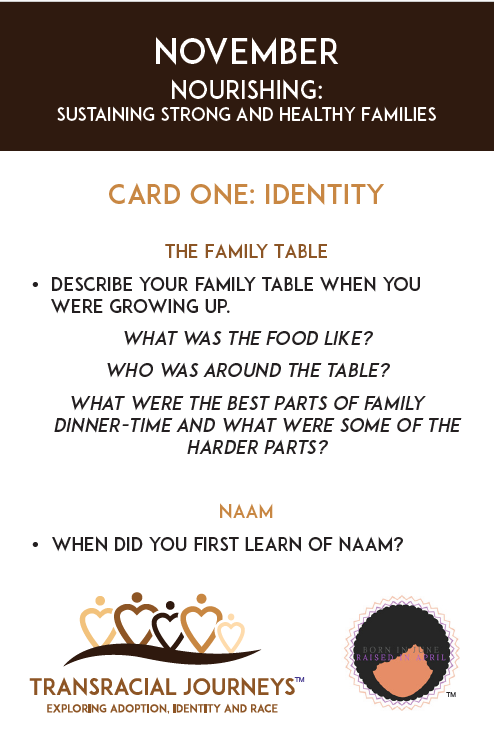
CARD ONE: IDENTITY
The Family Table: Describe your family table when you were growing up.  What was the food like?  Who was around the table? What were the best parts of family dinner-time? What were some of the harder parts?
NAAM: When did you first learn of NAAM?

CARD TWO: RELATIONSHIPS
The Family Table: Who were the people sitting around your family table?
NAAM: What does NAAM mean to you?

CARD THREE: EMBRACING AND FACING DIFFERENCES OF RACE AND CULTURE
The Family Table: Were there ever people of different races around your family table?
NAAM: How can we find our own unique ways to honor and mark NAAM?

This post is from our November, 2025, newsletter. If you would like to get our newsletter in your inbox each month, please subscribe.


Black Excellence – Dr. Tiya Miles

Dr. Tiya Miles: Weaving Truth and History

As we gather around our holiday tables this November -National Adoption Awareness Month -we’re reminded of how stories shape our understanding of family, history, and home. This month’s Black Excellence spotlight honors Dr. Tiya Miles, a historian and storyteller whose work helps us see the fullness of those connections.

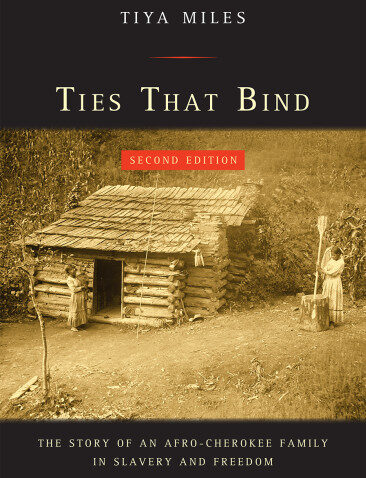
Dr. Miles is the author of Ties That Bind: The Story of an Afro-Cherokee Family in Slavery and Freedom, a groundbreaking book that explores the intertwined lives of African and Cherokee people in early America. Through this and subsequent works -including The House on Diamond Hill: A Cherokee Plantation Story, The Dawn of Detroit: A Chronicle of Slavery and Freedom in the City of the Straits, and her National Book Award -winning All That She Carried: The Journey of Ashley’s Sack, a Black Family Keepsake -Miles invites us to look beyond simplified narratives and into the layered, lived realities of identity, land, and lineage.

Her writing sits at the crossroads of African American, Native American, and women’s histories - places where truth is often complex and sometimes painful, but always necessary. Like the work of families navigating transracial adoption, Miles’s research calls us to open our eyes to what’s been missing and to honor the beauty that emerges when we do.

In a month that asks us to reflect on both thankfulness and truth, Dr. Tiya Miles reminds us that telling the whole story -of our families, our nation, and ourselves -is an act of love. Her scholarship is a model of what it means to hold history tenderly and to make space at the table for every part of who we are.

Learn more about Dr. Miles’s work at www.tiyamiles.com.

Black Excellence Posts:

Each month, we take time to highlight the remarkable contributions of Black leaders, trailblazers, and changemakers whose impact continues to shape our world. These stories serve as a valuable opportunity for transracial families to learn, reflect, and engage in meaningful conversations about Black history and culture. We invite you to explore our past Black Excellence features in the carousel below, where you’ll find inspiring figures from various fields—activism, science, arts, sports, and beyond. If you haven’t already, be sure to subscribe to our monthly newsletter to receive these stories, along with discussion prompts and book recommendations, right in your inbox.


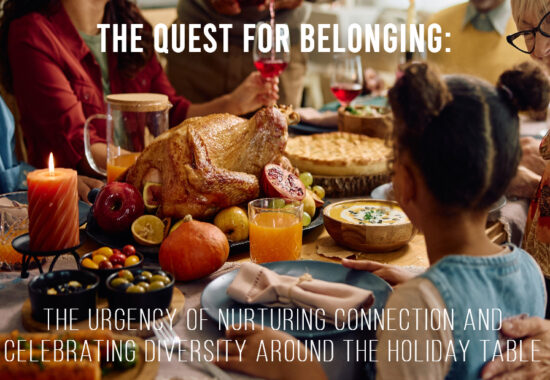
The Quest for Belonging:

The Urgency of Nurturing Connection and Celebrating Diversity Around the Holiday Table

By April Dinwoodie, TRJ Part-time Executive Director, Speaker, Trainer  

As a Black/Bi-racial transracially adopted person, I am mustering up the strength and centeredness to stay present, stay focused and not let the realities of our country stop me from protecting my community.  I invite you to do the same and see this as a time where we lean even harder into doing the work to protect children that are entrusted to you through adoption.  

As we enter this holiday season, families formed through transracial adoption may feel the impact of the recent election in especially profound ways. For Black and Brown children growing up in families that don’t mirror them, the current political  and societal climate brings to light ongoing issues of race and identity that can feel isolating, unsettling, and unsafe particularly when they don’t see their experiences reflected within their immediate family or community. It’s hard to put into words how unsettling it can be to have to be surrounded by people you know, who don’t truly see you or understand the weight of being enfolded into a family that does not look like them and where some people are simply not safe to be around.  

With racialized issues and polarized perspectives on social justice front and center, I am expecting an increased sense of “otherness” for Black and Brown children in homogeneous environments. From news coverage to conversations around the holiday table, this season may bring deeper dialogues and unspoken tensions. Children may be processing complex emotions: pride in their identity, fear for their safety, questions about belonging, and the desire to feel understood. This mix of feelings is compounded by the reality that their lived experiences with race differ significantly from those of their family.

For families, leaning into warmth and connection this holiday season means acknowledging these dynamics, intentionally creating space where children can express themselves, and showing a willingness to listen and learn. Addressing the challenges of the current moment means affirming each child’s identity and experiences, especially as they navigate a world where issues of race and justice are so prominent. Creating this space can help children feel more secure and deeply understood, even in the midst of difficult realities.

As you gather for the holidays, consider how to approach these topics with openness and empathy. Allow space for your child to share their feelings about the world around them and the ways in which they feel connected or disconnected. This season can be a time to reinforce family bonds and make room for the nuances of each child’s identity and experience, helping them feel safe, valued, and at home within their family.

Tips for Navigating the Holiday Season with Intention:

  • Be Thoughtful About Where You Spend the Holidays
    If extended family or friends may not provide a welcoming or understanding environment, consider celebrating at home or with a smaller, trusted group. Protecting the emotional and psychological safety of your child is paramount, especially when gatherings could bring up difficult or invalidating conversations.
  • Create Space for Honest Conversations
    Encourage your child to express any thoughts or feelings they have about current events, their identity, or adoption. Validate their emotions and show openness, letting them know it’s safe to discuss difficult topics within the family.
  • Plan Culturally Inclusive Activities
    Incorporate traditions or activities that honor your child’s cultural heritage. From meals to music and decorations, these gestures can foster a sense of pride and belonging.
  • Check In with Yourself
    Before and after conversations about race or identity, take time to reflect on your own feelings and seek support if needed. Approaching these discussions with a calm, centered mindset helps create a stable environment for your child.
  • Reassure Your Child of Their Worth and Belonging
    Remind them regularly that they are loved, valued, and an integral part of the family. This reassurance helps counteract the “otherness” they may experience in broader society and reinforces the family as a soft place.

Being intentional this holiday season will help create space for celebration and navigate the complexities that we are faced with today. 

Previous Posts About Inclusivity and Kindness at the Family Table:

Nourishment: Reflecting on Thanksgiving, Adoption and the Family Table

Beyond Words: Sustaining Strong and Healthy Families

This post is from our November, 2024, newsletter. If you would like to get our newsletter in your inbox each month, as well as information about our annual Transracial Journeys Family Camp and our monthly Zoom call to provide support for our transracial adoption parents please subscribe.


Book Corner-November 2023

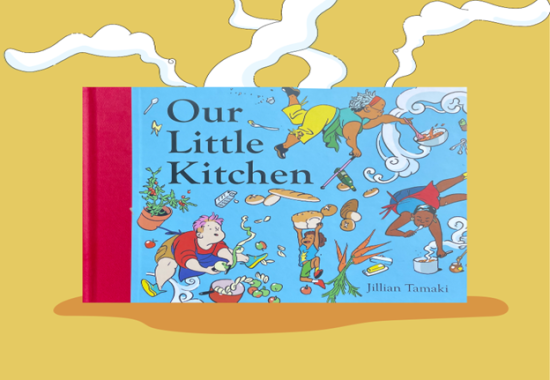
Our Little Kitchen

By Jillian Tamaki
Ages 4-8

This is a beautifully-illustrated, warm and cozy read with a focus on preparing food with love and with a group of diverse children and adults. Highly recommended not just for Thanksgiving but for any part of the year when you want to pull comfort from the words you read along with the pictures you see.

Jillian Tamaki is an award winning, Canadian author who shows how to build community, love and nurture around the preparation of food in a fun and whimsical manner.As the characters ask the following questions, you could ask the same of the children you’re reading the book with:

● Is your body warm?
● Is your belly full?
● Would you like seconds?

Book Recommendation for Transracial Adoptive Families

Book Recommendations for Families Created in Transracial Adoption

The Book Corner is a regular feature in our Transracial Journeys monthly newsletters. If you would like to receive monthly book recommendations via email, please subscribe.


Beyond Words: Sustaining Strong and Healthy Families

by TRJ Executive Director April Dinwoodie

Generosity and good heartedness are core values in the family system I was adopted into.  Throughout the year and especially during at the holiday season,  you’ll hear members of my family saying, "There is always room at our holiday table." It's a sentiment that suggests inclusivity and kindness and it feels good to open hearts and home to folks that may need a seat at your family table. 

With this spirit and with amazing cooks in the mix, on any given Sunday or holiday, there is a mix of family and friends, old and new, around our dining table. Laughter, love, and abundance fill the space and it’s hard not to feel blessed to have been enveloped into this warmth. At the same time, there were members of my family of origin that hung at the edges. As extended family and friends gathered round our table, I could not help but wonder where my extended family of origin were where? What were their holiday cultural traditions? And what was it like to look around a table and see genetic mirrors and physical resemblances?

Adoption is often characterized as a beautiful and transformative journey that brings families together. It is often accompanied by the sentiment, "There is always room at our table," reflecting the openness and love adoptive parents have for the children entrusted to them through adoption. However, when these words are spoken while family of origin are not welcomed, it raises important questions about the true meaning of inclusivity within the adoption experience.

The Importance of Family of Origin Inclusion:

Family of origin is an intrinsic part of identity and heritage for all human beings. Excluding family of origin from the adoptive family's table sends a message that their role and connection are not valued or acknowledged. It is essential to recognize that an adopted person’s story is not complete without healthy connections to the family that came before adoption. Excluding them not only denies the child their full history but can also create feelings of loss, confusion, and a sense of divided loyalty.

Adoption requires parents to center on true inclusivity and shift from merely extending words of welcome to actively fostering connections with family of origin. Here's how adoptive parents can challenge the status quo and create a more inclusive environment:

See Family of Origin as Your Family too:

I often hear adoptive parents speaking about an adopted person’s family of origins as “their family” when in reality, it’s really “our family.” Even with the complexities of family separation, abuse and neglect, there are ways to be in relationship with even the idea of family of origin with open, truthful, and age-appropriate conversation. In order to fully embrace family of origin, parents must first internalize their feelings connected to the kin of the child. This is big human work and with supports as needed, community to validate the difficulties, and with the best interests of children at the center, these important connections are possible.

Building Bridges, Not Barriers:

View the family of origin as potential partners and positive influences in the child's life. If healthy relationships are not possible, there are other complications with the contact and previous abuse and neglect, you may have to work hard to make sure there is at the very least a conversational connection to family of origin. By integrating the appropriate level of discussion and action surrounding family adoptive parents demonstrate a commitment to inclusivity and recognize the value of the child's entire support network and the importance of healthy identity.

Celebrate Shared Moments:

For more practiced families, incorporation of the family of origin into significant events and milestones in the child's life can be transformational. Birthdays, graduations, and holidays can be celebrated together, creating an inclusive environment where a child does not feel they have to choose which family they want to celebrate with. If there is not an opening for connections to family of origin, you can engage in active dialogue about the family that is not always present to acknowledge and honor the child's roots, traditions, and cultural heritage.

Create Opportunities for Conversation:

Take the lead in fostering a supportive environment where children feel comfortable discussing and exploring their feelings about family connections. Encourage open conversations about adoption and provide resources that help them understand and navigate your unique family dynamics. By acknowledging and validating emotions, parents can help their children develop a healthy sense of self and identity. The November conversation cards help set the tone and guide discussions.

Remember, as adoptive parents, when you say, "There is always room at our table," are you truly open to any and all pulling up a chair? Inclusion goes beyond words; it requires active efforts to build bridges, promote open communication, and celebrate shared moments. By recognizing the importance of family of origin, adoptive parents can create a more culturally appropriate and nurturing environment for children. Only by embracing the full spectrum of a child's identity and heritage can we truly honor the spirit of adoption and create a more inclusive, loving, and supportive family dynamic.

I sought out my family of origin and am in connection with many family members on my maternal side but we have yet to all sit down at the holiday table together. My hope is that your children get connected to origins in whatever way possible with you by their side with open hearts and minds.

This post is from our November, 2023, newsletter. If you would like to get our newsletter in your inbox each month, as well as information about our annual Transracial Journeys Family Camp and our monthly Zoom call to provide support for our transracial adoption parents please subscribe.


Nourishment: Reflecting on Thanksgiving, Adoption and the Family Table

author: Avril McInally

Our November theme is all about family and nourishment but not simply about food and what we eat, but how we nourish our understanding of the uniqueness of our families and in service of the children we are entrusted to care for and love.

This month we center on both Thanksgiving and National Adoption Awareness Month (NAAM)! This year NAAM’s theme is “Small Steps Open Doors”. One step we can take as adoptive parents is to participate in the online training available from the National Training and Development Curriculum for Foster and Adoptive Parents. This curriculum,

“is now available and free to States, counties, Territories, Tribal Nations, and private agencies. The curriculum encompasses more than 38 themes that include contributions from adults who have experienced foster care and address topics such as parenting in racially and culturally diverse families, trauma informed parenting, and maintaining a child’s connections.”

Thanksgiving and NAAM

At the intersection of Thanksgiving and National Adoption Day, which is held annually on the Saturday before Thanksgiving, while we traditionally center on the joy we also need to make space for the challenges that come to our literal and figurative table. Days commemorating adoption, as well as the history of Thanksgiving, can be challenging for those of us who have been adopted as well as for indigenous people in the United States. We, as families formed by transracial adoption, have a unique and lived perspective of coping with related challenges in this nation. As we continue to move through the more complex layers of our modern lives, we can ask ourselves an important question - how can we celebrate or commemorate Thanksgiving and NAAM? Related post: Adoption: A Three-Sided Coin

Deciding What Holidays to Celebrate

In the past, we’ve shared thoughts about Juneteenth and Independence Day, and how different families decide to celebrate one holiday over the other. What we choose to put on our calendars and how we choose to celebrate or give a moment’s grace to our anniversaries is personal to each one of our families. This year, we encourage all families to work on threading the strands of National Adoption Day and Thanksgiving together at the Thanksgiving meal. Let’s give thanks for family, honor the adopted children entrusted to us, and continue to process the history of Thanksgiving and how it plays out in our lives today. As children advance and grow, we can encourage conversations and connections to adoption and differences of race. Regardless of how old children are, there is an opportunity to explore the important elements of identity and connection.

This post is from our November, 2022, newsletter. If you would like to get our newsletter in your inbox each month, please subscribe.