Simone Biles – Black Excellence

On the Transracial Journeys Facebook Page, we recently asked for Black Excellence nominations. You did not disappoint! With nominees such as Jason Reynolds, Jacqueline Woodson, Resmaa Menakem and Simone Biles, it was tough to choose. However, there’s one candidate who strongly represents this month’s themes of love and history (in the making) and she is Simone Biles! Thank you for your nomination Nicole Zistler, and please keep your nominees coming.

Simone’s strength and grace is not simply about her gymnastics but it’s also present as she has had to navigate inappropriate discreditation of her family structure. Born in 1997, Simone and her three siblings spent their early childhood in foster care until her maternal grandparents adopted Simone and her younger sister, Adria. Her two older siblings were adopted by her grandfather Ron Biles’s sister, Harriet.

Inspired by Gabby Douglas at a young age, Simone has said, “Growing up, I didn’t see very many Black gymnasts…So whenever I did, I felt really inspired to go out there and want to be as good as them. I remember watching Gabby Douglas win the 2012 Olympics, and I was like, if she can do it, I can do it.”.

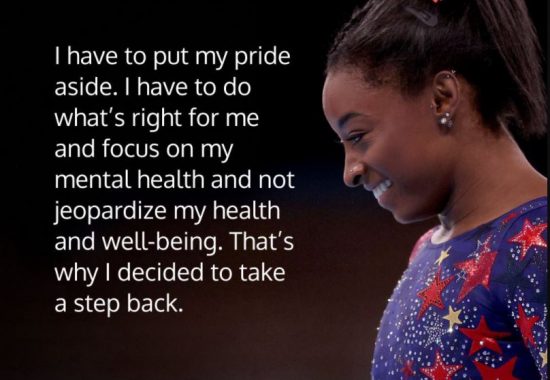
Simone Biles is not only the most decorated gymnast of all time with 7 Olympic medals and 25 World Medals, but she’s also known for mental health advocacy on behalf of herself and others. Under incredible pressure and under the world’s spotlight, she stepped out of the Tokyo Olympics to take care of her own mental health. She stated,

I have to put my pride aside. I have to do what’s right for me and focus on my mental health and not jeopardize my health and well-being. That’s why I decided to step back.”

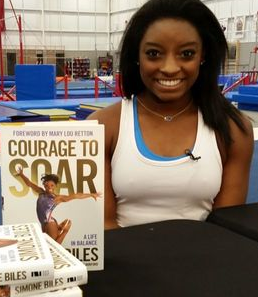
At past Transracial Journeys  Family Camps and Zoom meetings, several of our kids have excitedly voiced their love for Simone. There are many books about her available at your local library, but only one of them is written by her “Courage to soar: a body in motion, a life in balance”. Check it out!


Black Excellence – bell hooks

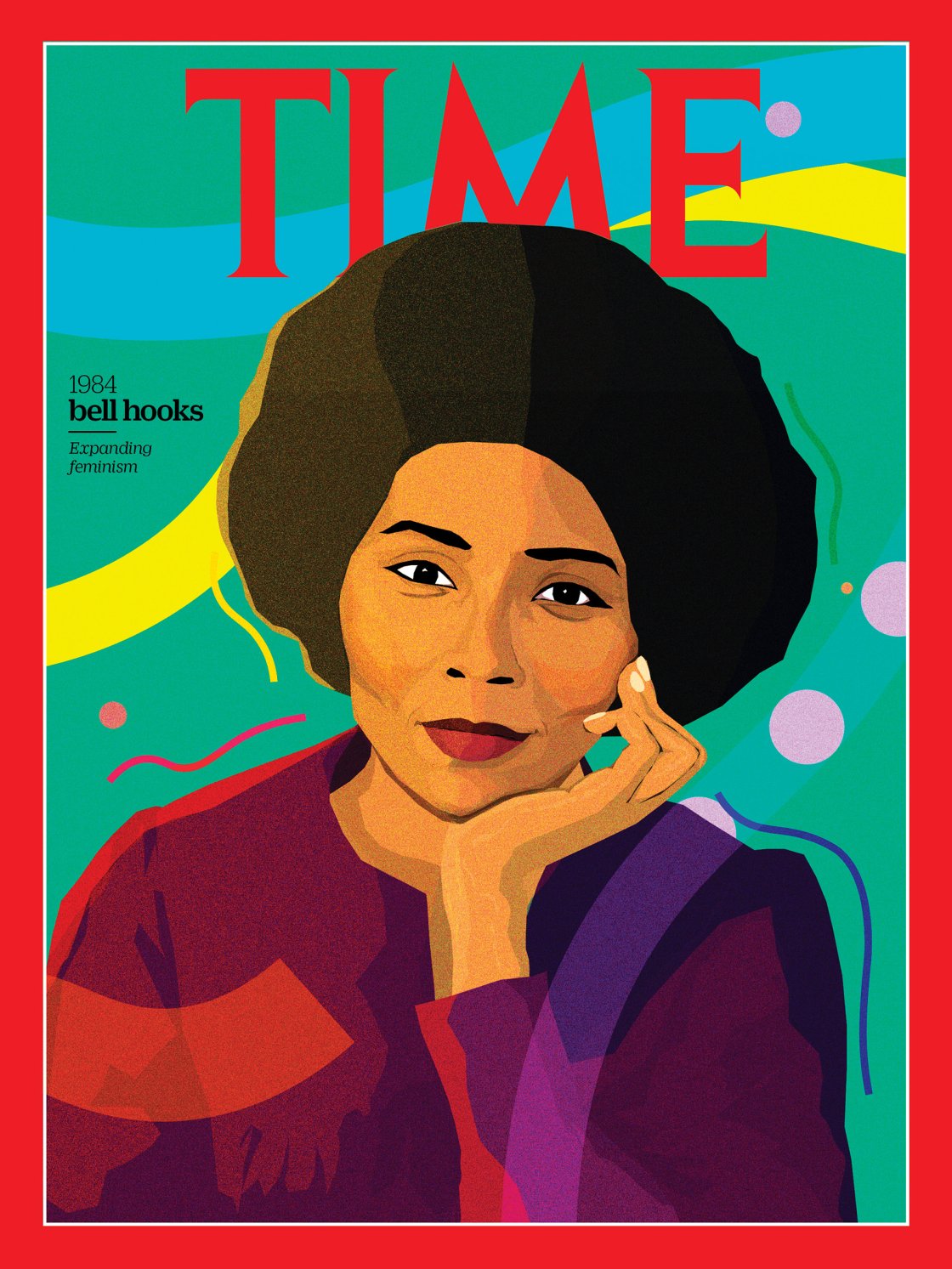
Buy the cover art→  Art by Monica Ahanonu for TIME

Gloria Jean Watkins aka bell hooks (September 25, 1952 – December 15, 2021)

This month, we celebrate bell hooks and her contributions to race, class, and culture in her many books, and in her work as a feminist and as a professor.

In her book “All About Love”, she wrote that we put more emphasis on love as a noun, but she asked her readers to use it more like a verb. In the same book, she referred to M. Thomas Peck’s definition of love as

“the will to extend one’s self for the purpose of nurturing one’s own or another’s spiritual growth”.

We have a lot to learn about our relationship to love, loving ourselves and loving others.  Dr. Hooks has left us a legacy of instruction in her body of published work.


The New Year and Hard Relationships

It’s a new year, and January generally comes to us with the mindset of making New Year’s resolutions and thinking about the year ahead. These resolutions are generally about things and not about our relationships (our connectedness) with others or with ourselves.

Teaching Our Children Healthy Relationships

Our behavior and thoughts about our relationships with others can range from warm and loving to anxiety provoking or even scary. In working on our relationships, think about love as an action. Consider activating love, relationships and doing the work to extend yourself in order to nurture yourselves and your children. It’s not easy, but showing our children how to do this when they are still children, and in our care, is a healthy concept to teach.

With this in mind, and because adoption is rooted in complexity, it is important that we, as adults and parents, work on processing our relationships and our connection to difficult things, concepts, and circumstances. Doing this will not only benefit us as individuals, but our children and extended families too!

Our Relationship With the Calendar

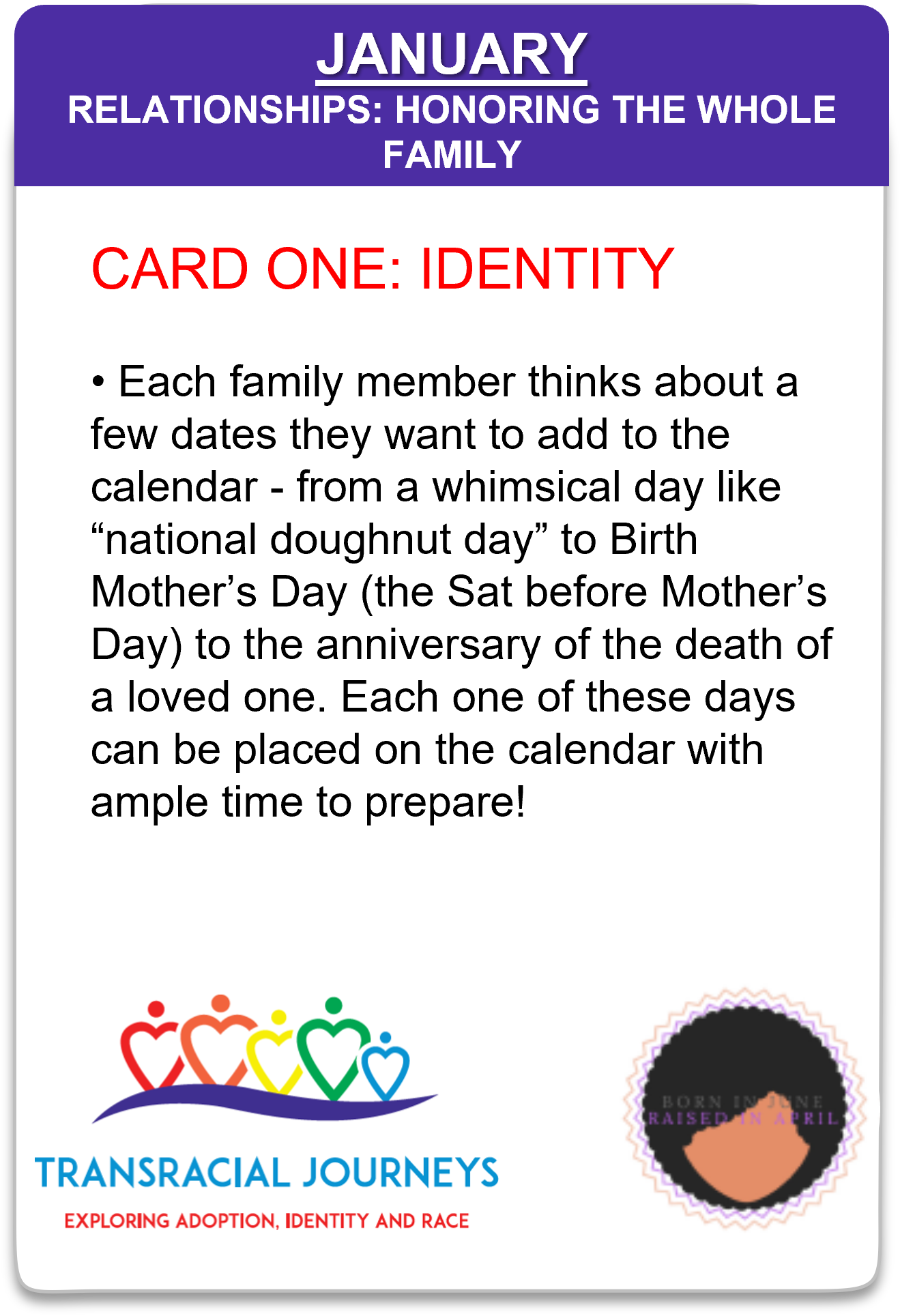
One of the first relationships you can lean into in January is your relationship to the calendar. In your TRJ card deck, April asks you to chart out some dates and anniversaries for the year with your children. Think about your relationships to these events (both celebrations and Transracial Adoption Conversation Cardschallenges) and how you might prepare for them. Share your strategies with your children, have them share their ideas and their “asks” for support or celebration with you and then co-create your year. Don’t worry about getting the whole year planned, you can go at a pace that works for you and your family.

Read more about January conversation cues, including Pro-Tip for Parents, in this month's Calendar and Card Deck post: "January Relationships: Honoring the Whole Family."

Co-Creating your Family Calendar

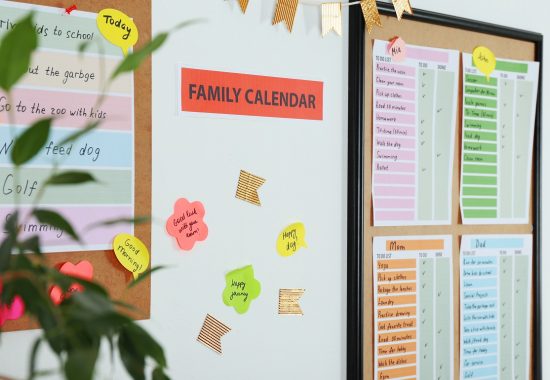
For families that received the TRJ June in April calendar, we intentionally left it blank with no holidays or events. Instead, we gave you a list of possibilities on one of the first pages so you can fill in exactly what you’d like as a family. If you don’t have one of our calendars and you’d like one, send us a note to info@transracialjourneys.org and we’ll get you one. You can also do a similar exercise with ANY calendar you have and read our monthly emails for your conversation stimulants. Reclaim your calendar together and use it as a center of gravity for transformation!

This post is from our January, 2022, newsletter. If you would like to get our newsletter in your inbox each month, please subscribe.


Recommendations for Giving Books this Holiday Season

 - by Avril McInally, member of the TRJ Board since 2016

On a personal note, I’d like to share a story about a book my daughter, Mary, enjoyed when she was a wee girl. When I discovered the board book “Shades of Black” by Sandra Pinkney, I bought a copy (I should have bought two so I could share one with her White best friend). Mary and I read it many times and until it became tattered and too young for her. The last line in the book read “I am black, I am unique.” Mary often read that sentence aloud. It sounded like “I am black, I am yougique.” Reading this book is a happy reminiscence for us, but it also takes me back to a time when I hardly saw any reflections of our children in books. If they did appear, they were often secondary characters.

Recommended Books

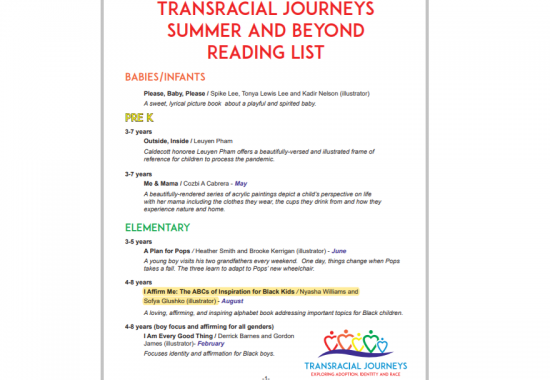
In memory of this experience, I created an annotated bibliography for our children that came in your care packages just before camp this summer. As I think about all the characters in the books I recommended, I am thankful that we have a much wider representation of families, of children and of their many different intersectionalities. It’s not so difficult for our children to open up books today and see a reflection of themselves, but this was hard to find when my children were young.

If you are purchasing gifts this season, I would like to recommend to you that you use this bibliography as a tool to share our children’s experiences and let others have the experience where characters representing them are secondary in these books, for once. Let them experience a little of what it is to be a young, Black human being by reading about it from a young Black person’s perspective. Share this window into our children’s world with White children as well as Black ones, and support wonderful authors and illustrators who are people of color as well as LGBTQIA2S+.

This post is from our December, 2021, e-newsletter. If you would like to get our newsletter in your inbox each month, please subscribe.


Black Excellence – Virgil Abloh

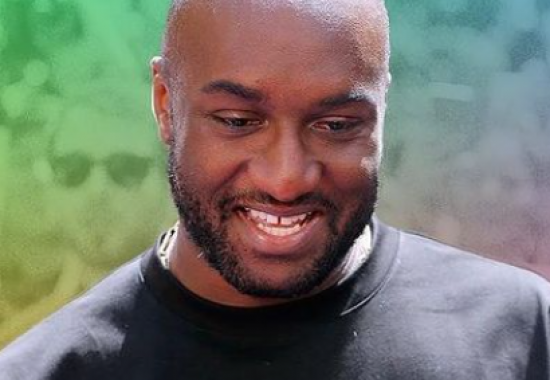
This month's focus on Black Excellence is a tribute to Virgil Abloh who recently passed away at the young age of 41.  His career as a designer worked at the intersections of his race, culture and fashion.  Not only was he a wonderful fashion designer, but he also worked consistently to build up other Black creatives. He left young,  aspiring designers a "Post-Modern Scholarship" fund which works "to foster equity and inclusion within the fashion industry".

The first African-American to be artistic director at a French luxury fashion house, Abloh was named by Time magazine as one of the 100 most influential people in the world in 2018.

Learn more about Virgil Abloh's career and more about the VIRGIL ABLOH™️ “POST-MODERN” SCHOLARSHIP FUND in the video below.

"I want to give out as many scholarships... it's a little bit deep, but the world works on this "hey what school did you go to?" All of a sudden the interview gets easier …, and I just hope we get to a point with our partnership that it means something on a resume just the same way someone who has Harvard or a law degree from Stanford. The interview gets shorter and you get the job right away. I don't look at the height of my achievement as LV (Louis Vuitton). The height of my achievement is this scholarship fund." - Virgil Abloh


‘Tis the Season to Reminiscence

What does it mean to reminisce?  I have difficulty spelling the word, never mind fully understanding it.  After a quick search, I found a few accessible definitions. These included a story told about a past event remembered by the narrator, and the enjoyable recollection of past events.

However, for our families in particular, reminiscing isn’t always a rosy experience. Sometimes, it can be a thorny one. Digging deeper for more meaning, I found the term differently-defined  in a Merriam Webster dictionary.  Hold on to your hats!

  • Apprehension of a Platonic idea as if it had been known in a previous existence
  • Recall to mind of a long-forgotten experience or fact
  • A remembered experience
  • Something so like another as to be regarded as unconscious repetition, imitation or survival

Often, we search for warmth and meaningfulness in our memories and reminiscences, especially during the holiday season,  but they’re often laden with events that can activate thoughts of loss. “Reminiscing together, and sharing feelings and memories about the people who are not present brings everyone closer,” writes Madeleine Krebs, LCSW-C, but that isn’t always necessarily the case. She states that it is important that parents “understand the complex feelings around the many losses that adopted children have experienced.”  Krebs goes on to write, “I remember the teen who had never had a Christmas tree and did not know what to do when invited to help trim it… and another child whose birth family was often homeless and had no money to buy food or gifts, who felt guilty and overwhelmed by what she received from her new family.”

Celebration Can Magnify Grief

Recalling past events can bring forth happy memories as well as difficult ones.  “Know that the joy of celebration can actually magnify our grief,” writes adoption professional Elise Lowe. Lowe describes how to recognize behaviors in our children that may stem from this emotion. Those include: angry outbursts, being withdrawn, anxiety, irritability or having trouble sleeping. These things can happen when difficult memories are being revisited, or when we are reminiscing, but we can help our children cope.  Lowe says we can respond to these behaviors with sensitivity, support and compassion, and  notes that being empathetic builds attachment.

Consider Ways to Offer Support

What else can we do? In the rush of holidays December brings, it’s important to slow down and pay attention to our kids, share our feelings and honor theirs. For children that may have memories of holidays past, ask them about their traditions, says Krebs. We can also consider the following.

  1. Don’t erase those who look different from the rest of the family. Adult transracial adoptee Rebekah Hutson, asks that we make our transracial families multicultural and points out that this is especially important during holidays and anniversaries.  “Just imagine looking around your family… Family, the people who are supposed to ride for you, and seeing all the love, laughter, and support for certain people, and then complete erasure of others who look different.” “Don’t just include us in your family, treat us like family; become part of our family.”  Trauma can be lessened when you keep your child connected to their culture.
  2. Be aware of and prepared for sensory overload. There are loads of stimuli during the holidays and they can be overwhelming. Simply switching on the tv and seeing all the movies and commercials related to happy families and unrealistic expectations can overload our circuits.  For kids with trauma in their background, consider maintaining an environment that’s predictable and consistent in order to soothe their nervous systems.
  3. If your child remembers their biological family, ask them how holidays were celebrated. Work together to incorporate some of those traditions into the season. If you have an open relationship with your child’s family of origin, consider nurturing this relationship even more at this time of year. Krebs outlines that our children can write letters or emails, draw pictures and send cards or make phone calls.  You could plan a holiday celebration to hold on a visit with biological family members too.
  4. Social worker, Krebs describes some accessible activities in her article “The Holidays - an opportunity for loving healing”.  They include adding some old, favorite holiday foods to the menu, or “lighting candles in memory of ALL loved ones not present.” She mentions one family she worked with that “made a paper chain containing all the names of both birth and adoptive family members and hung it in the doorway for all visitors to see.”
  5. Seek out holiday songs from your child’s culture. Listen to them and try singing them too.
  6. Be on alert for any actions or behaviors from friends or extended family that may harm or isolate your adopted child. If this does happen, talk to your child about the problem as well as talk to the  people who have   harmed your child. Always stand up for the rights of your child, be clear with others and be your child’s protector and advocate.
  7. Be culturally expansive about holiday traditions. Have everyone  share something they like about the holiday as well as talk about their favorite traditions.  Decide to incorporate some of these old favorite traditions from all members of the family, and turn this into your own, new tradition.

This post is from our December, 2021, newsletter. If you would like to get our newsletter in your inbox each month, please subscribe.


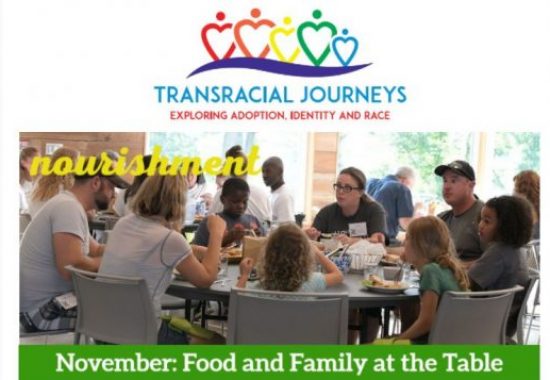
Nourishment: Food and Family at the Table

The following post is from our November, 2021, newsletter. If you would like to get our newsletter in your inbox each month, please subscribe.

November brings us one of the more complicated historical holidays (Thanksgiving) and for many in the United States, one of the more family and food-centric holidays. Whether you are a family that marks Thanksgiving or chooses not to in a traditional way, this month we are thinking about the family table and what might be true when there are differences of race and culture with transracial adoption. November also brings National Adoption Awareness Month, (NAAM) which can be challenging for some adopted persons. (read "Adoption: A Three-Sided Coin")  This month prompts on your activity deck include questions for both areas of discussion.

November Pro-Tip to Foster Conversations About Transracial Adoptions

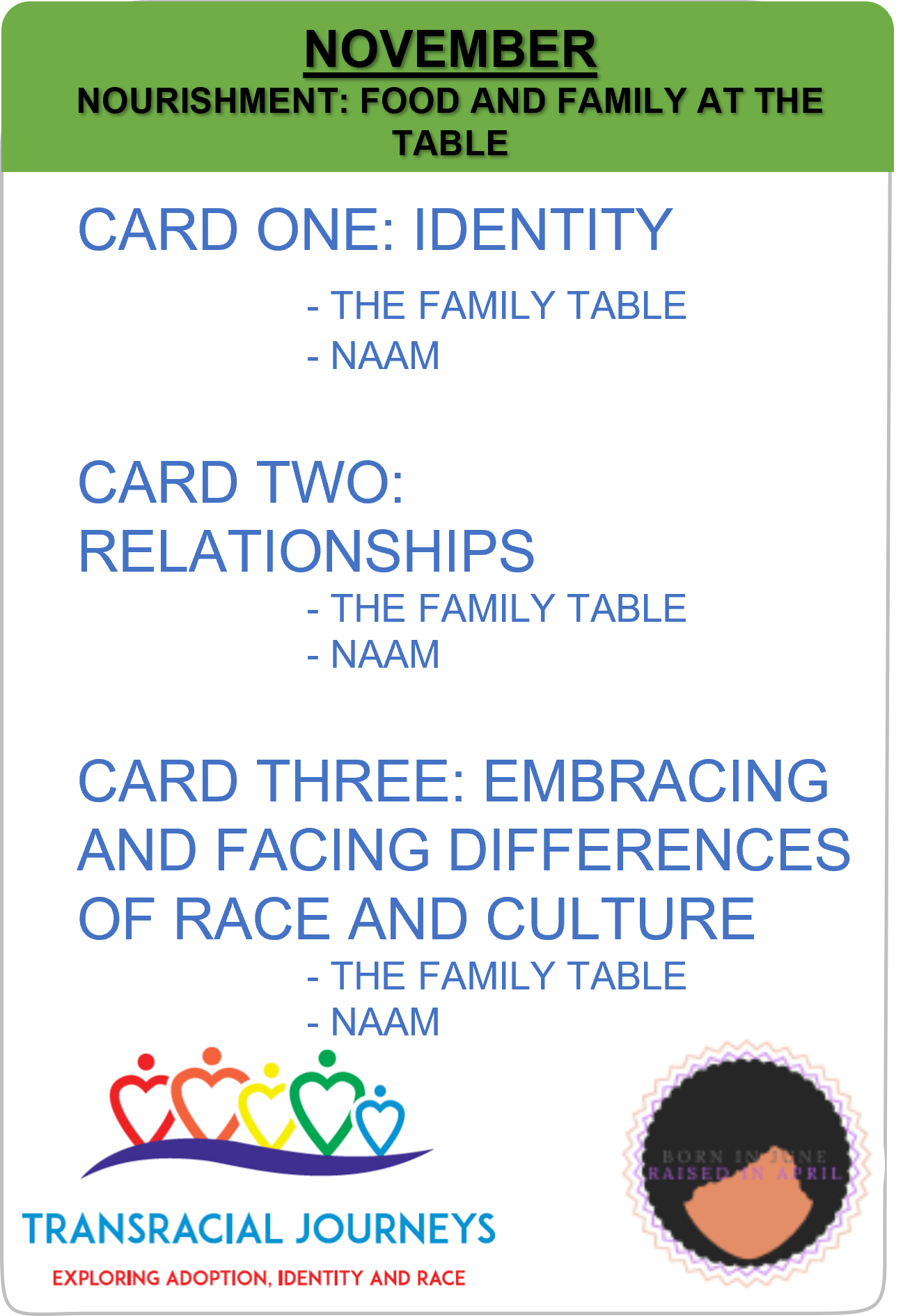
At Transracial Journeys we send out cues for conversations each month. Our Transracial Journeys card deck contains 3 cards for each month that the children use to ask their parents questions. Below are the questions for November. Before getting started, read the parent pro-tip each month.

November Pro-Tip for Parents: Talking about family and complicated history can activate deep-seated emotions and feelings. Make sure you have the support you need to process your feelings before and after the conversations you may have with your children.

November Transracial Adoption Conversations

CARD ONE: IDENTITY
The Family Table: Describe your family table when you were growing up.  What was the food like?  Who was around the table? What were the best parts of family dinner-time? What were some of the harder parts?
NAAM: When did you first learn of NAAM?

CARD TWO: RELATIONSHIPS
The Family Table: Who were the people sitting around your family table?
NAAM: What does NAAM mean to you?

CARD THREE: EMBRACING AND FACING DIFFERENCES OF RACE AND CULTURE
The Family Table: Were there ever people of different races around your family table?
NAAM: How can we find our own unique ways to honor and mark NAAM?


Adoption: A Three-Sided Coin

The following post is from our November, 2021, newsletter. If you would like to get our newsletter in your inbox each month, please subscribe.

It’s November. I’m processing the lengthening darkness of our days and basking more in the sun as it makes its daily, silvery appearances briefer and briefer. This processing is followed by the slight confusion brought upon by daylight savings. Does that extra hour really work for me and my schedule when I set my clock back on Sunday? Ahh, I get an extra hour of sleep in the morning - glorious! Crap, less daylight hours to move around my urban village freely as I don’t walk outside alone at night. Do I really need to change the clock on the stove and in my car, or can I just live with that one hour time difference until spring? The old phrase “there are two sides to every coin” comes to mind.

November is National Adoption Awareness Month (NAAM)

The heads and tails of our anniversaries, conversations, or experiences aren’t always easy to process. If we could have a special coin for the experience of adoption, it would have three sides, a side for each member of the extended family of adoption. Historically, the media we have consumed around adoption has been one-sided and voiced from the perspective of and generally, in high appreciation of the adoptive parent. I’m thinking about this perspective now especially, as this is National Adoption Awareness Month (NAAM), and the narrative is out in full force.

Implications of "Rescue Language" for Adopted Persons

Much of the messaging surrounding adoption is and has been focused on the goodness of the adoptive parent(s) because we’ve supposedly done a heroic thing in adopting a child. Some of the commentary goes so far to speak about how we’ve rescued our children. Who and what were our adopted children rescued from, who are the good and bad members of the extended family of adoption, and what does the use of this language imply? How might this message rest with parents of origin and with adopted persons? What if the others had a louder, more empowered voice not just during this month, but throughout the year? What words could we use to describe the lived experience of adoption in lieu of the “rescue language”?

Making Room for Perspectives of Transracial Adoptees

The language and narrative of adoption has, in general, been uncomfortable and/ or harmful to our children and to their families of origin. Nicole Chung a transracially adopted person and author of the book “All You Can Ever Know” writes, “We must listen to transracial adoptees and make room for their perspectives, including the ones that make us uncomfortable - because when it comes to the wellbeing of adopted people and their families, the truth will serve far better than even the most comforting of lies.”

It’s time to flip the script from an adoptive parent focus and focus the conversation on the narrative of the adoptee. Someday soon, we can flip the script even further to focus on families of origin. Please watch this Flip the Script video made for NAAM and listen to the voices of several adult adoptees. Consider including some of their valuable suggestions into your own family’s script and go ahead… flip it!

Experiencing Thanksgiving When Multiple Worlds Combine

It’s November and Thanksgiving is nearly here. Former foster youth and founder of Think of Us (a research and development lab for child welfare), Sixto Cancel, brings forward his experience of Thanksgiving and how multiple worlds come together in an interview with April. For him, bringing these multiple worlds together can be emotional. Sixto asks for us to be ok with the ups and downs that happen when families are recombined, and April wonders what Thanksgiving is like for members of her family of origin.

Before stepping into the holiday season, let’s ask ourselves to be ok with the ups, the downs and the beautiful collisions of our own multiple worlds. There’s a lot on the table for us to internalize and digest literally and otherwise. Let’s, belly up to the smorgasbord, undo that pesky top button on our jeans, take a deep breath, and recognize the beauty of our multiple worlds. One last thing, before you make the potato salad take a peek at Chadwick Boseman’s what not to do recipe on an old SNL Black Jeopardy sketch.